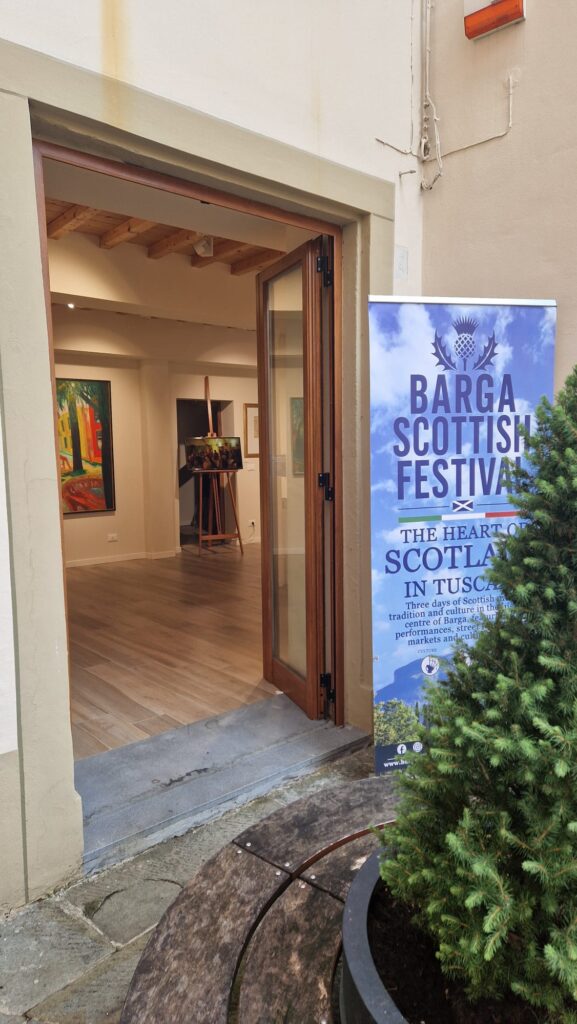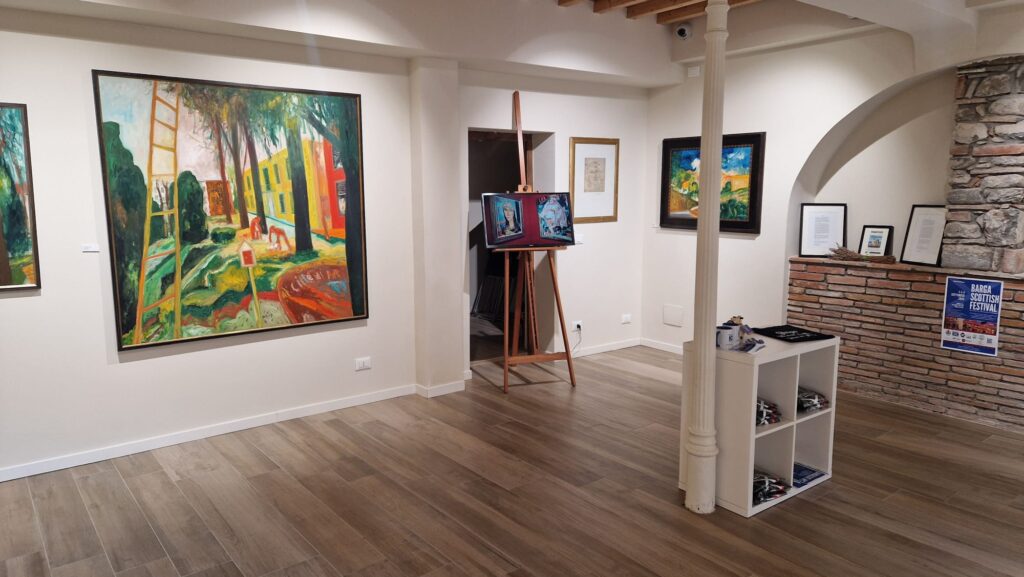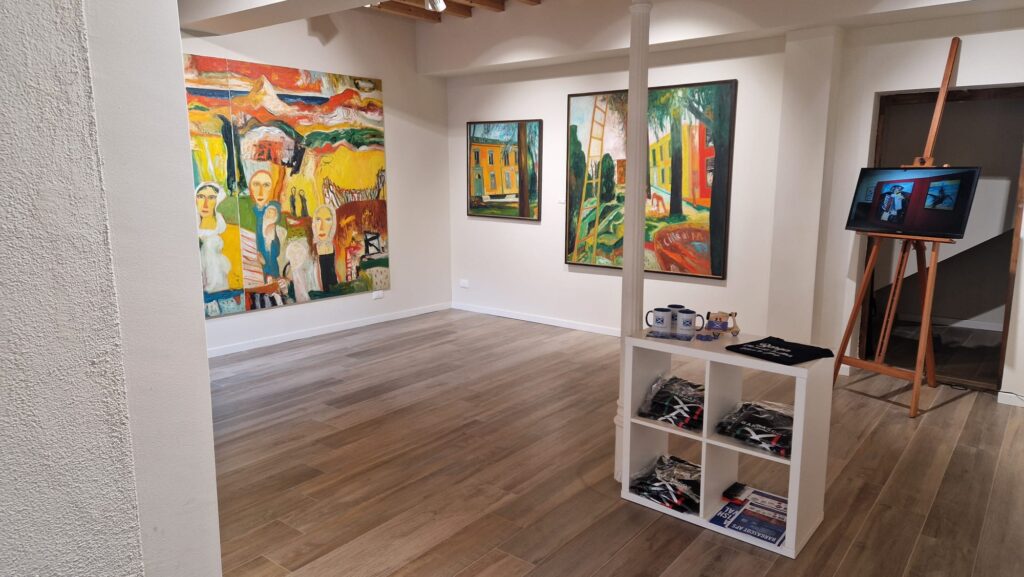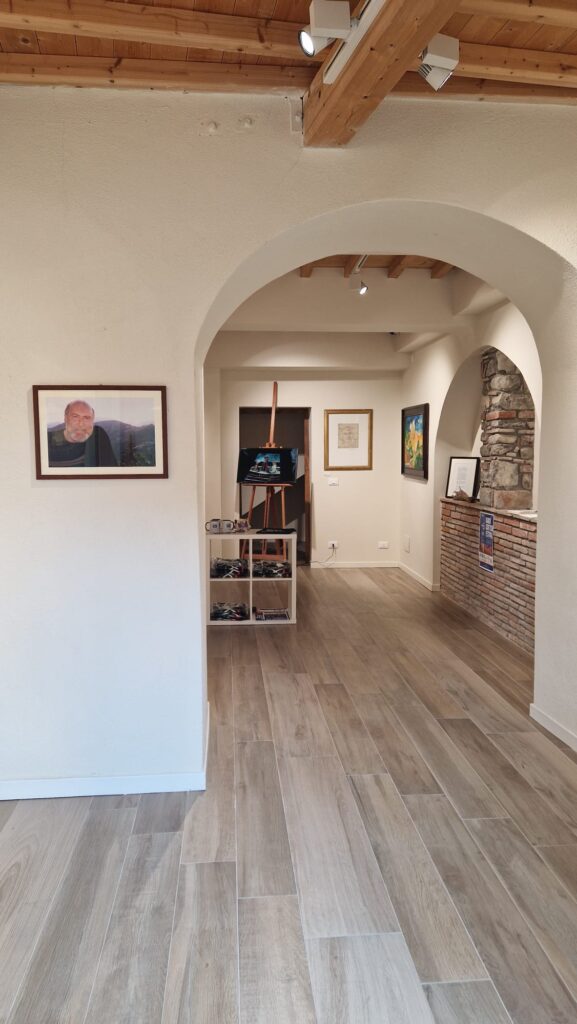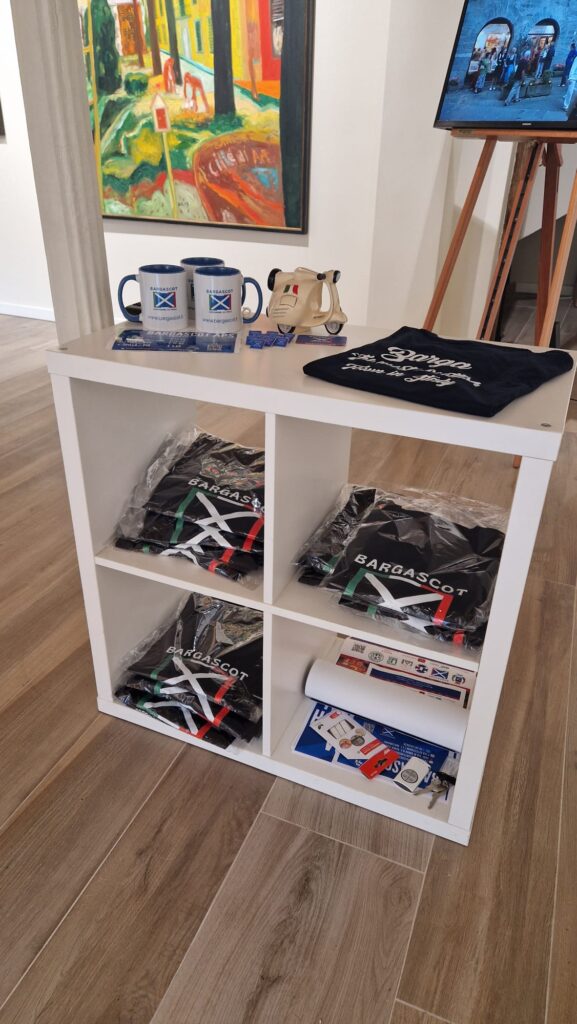
Mostra permanente di John Bellany a Barga | BargaScot (Google Maps)
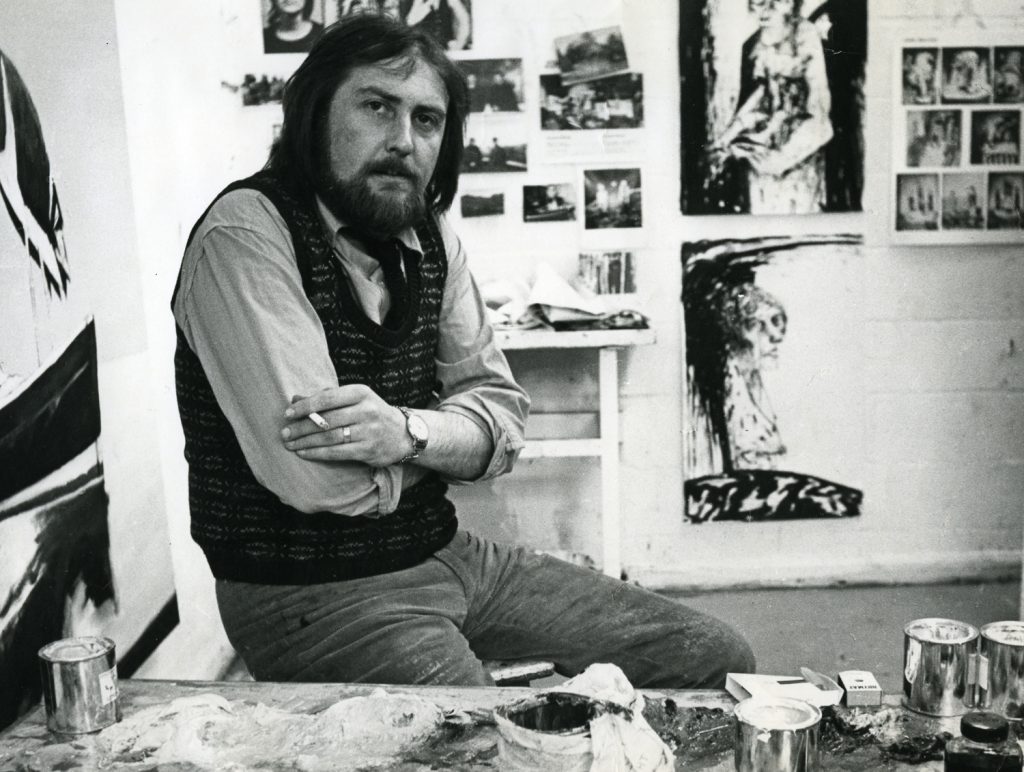
Biografia
John Bellany è stato uno dei più influenti pittori scozzesi del dopoguerra e contribuì a riportare in primo piano una tradizione artistica figurativa nazionale in un’epoca in cui il Modernismo e l’astrazione sembravano incontrastabili.
Nato a Port Seton nel 1942, in una famiglia di pescatori e costruttori di imbarcazioni, e cresciuto in un ambiente profondamente permeato dal Calvinismo, Bellany sviluppò un’arte intensamente spirituale, caratterizzata da una costante riflessione sulla moralità e sul riconoscimento del male. Questa visione si consolidò ulteriormente nel 1967, quando una traumatica visita ai resti del campo di concentramento di Buchenwald lo segnò profondamente. Ma il percorso umano di Bellany si sarebbe rivelato altrettanto rischioso e tormentato quanto le traversate in mare affrontate dai suoi antenati.
Per tutta la sua carriera dipinse potenti allegorie universali capaci di racchiudere la complessità della condizione umana, profondamente radicate nella ricca poesia del mare. Dopo il trasferimento a Londra nel 1965 per studiare al Royal College of Art, tuttavia, la sua visione artistica e il suo linguaggio iconografico si ampliarono notevolmente. Negli anni Settanta, mentre la sua vita personale attraversava una fase di profonda crisi, Bellany intraprese un percorso di autodistruzione che rischiò di essergli fatale, esperienza che trovò espressione nelle immagini cariche di angoscia che caratterizzano i dipinti di quel periodo.
Bellany’s life voyage
has proved every bit
as perilous as the sea
voyages of his
ancestors.
Negli anni Ottanta Bellany si sottopose con successo a un trapianto di fegato, esperienza che diede origine a una straordinaria serie di dipinti, iniziata – con grande stupore del chirurgo che lo aveva operato – poche ore dopo aver ripreso conoscenza.
La forza del suo esempio ha ispirato una nuova consapevolezza e un rinnovato orgoglio tra gli artisti scozzesi, un contributo ufficialmente riconosciuto con il conferimento dell’onorificenza di Commander of the Order of the British Empire (CBE). Le sue opere sono oggi conservate nelle collezioni di alcuni dei più importanti musei e gallerie d’arte del mondo, tra cui the National Galleries of Scotland, The Tate Gallery, National Portrait Gallery, Museum of Modern Art and the Metropolitan Museum, New York.
Per gentile concessione di Bellany.net

Biography
John Bellany was one of the most influential Scottish painters since the war, and re-established a native, figurative art at a time when Modernism and abstraction seemed invincible.
Born at Port Seton in 1942 into a family of fishermen and boat builders and steeped in Calvinism as a child, his art is profoundly religious in its intimation of morality and recognition of evil; facts reinforced in 1967 by a traumatic visit to the remains of the Buchenwald concentration camp. But Bellany’s life voyage has proved every bit as perilous as the sea voyages of his ancestors.
Throughout his career he has painted elemental allegories encompassing the complexities of the human condition and anchored in the rich poetry of the sea; but after moving to London in 1965 to study at the Royal College of Art, his vision and iconography became broader. In the seventies when his personal life was in turmoil, he embarked on a near-fatal journey of self-destruction, reflected in the angst-ridden images in his paintings of the period.
Bellany’s life voyage
has proved every bit
as perilous as the sea
voyages of his
ancestors.
In the nineteen-eighties he successfully underwent a liver transplant which inspired a remarkable series of pictures started, to the astonishment of his surgeon, within hours of regaining consciousness.
His towering example has inspired a new pride in Scottish artists; a fact duly recognised when he was awarded the CBE. His paintings are in the collections of major museums and art galleries throughout the world, including the National Galleries of Scotland, The Tate Gallery, National Portrait Gallery, Museum of Modern Art and the Metropolitan Museum, New York.
Courtesy of Bellany.net